
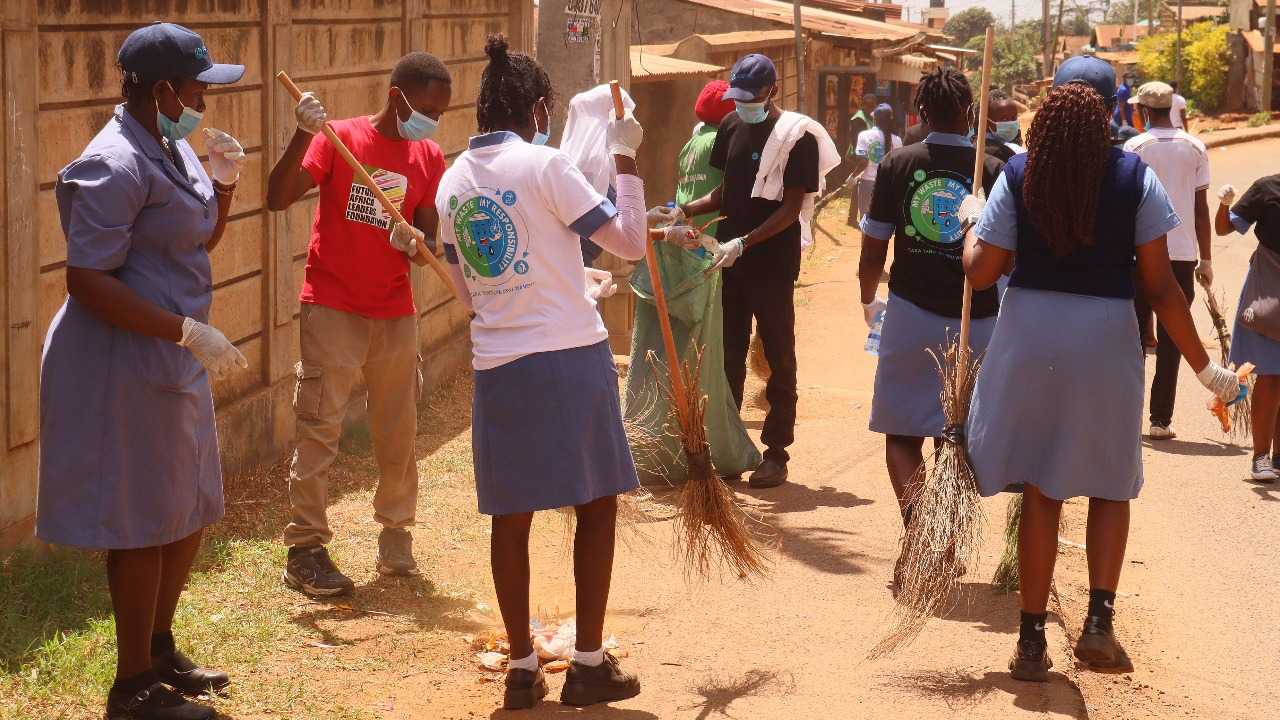
In Banana Town, Kiambu County, a group of young people once dismissed as “idle” now run a seedling nursery, organise monthly clean-ups, and train their peers in agribusiness. Their story is not an exception. Across Kenya and Africa, a quiet but powerful shift is underway: when young people are given skills, empowerment and real responsibility, entire communities begin to change.
In many African communities, youth are still spoken of mainly as a problem of unemployment, restlessness and migration. Yet the same young people, when deliberately empowered, become one of the most effective engines of community development. The difference is not age or energy alone. It is opportunity, structure and genuine inclusion.
Youth empowerment goes beyond one-off training or motivational talks. It means equipping young people with practical skills, creating space for them to lead and linking their efforts to the real needs of their communities. Where this happens, the results are visible and measurable.
In education, empowered youth often become peer mentors and after-school tutors, extending learning beyond the classroom. In health, they drive awareness campaigns on hygiene, reproductive health and disease prevention. In agriculture and environmental work, they introduce new techniques, manage nurseries, organise clean-ups and champion waste responsibility. In entrepreneurship, they start micro-enterprises that create jobs for themselves and others.
The Banana Town experience illustrates the point. When local leaders, community organisations and college students joined forces around practical horticulture training and a community clean-up, young people did not remain spectators. They cleaned, learned, taught, and later took ownership of seedling production and environmental messaging. Three strategically placed garbage bins became more than infrastructure; they became symbols of a new social contract in which youth and residents shared responsibility for public spaces. The initiative reached tens of thousands of people and sparked demand for more regular community action.
What makes youth empowerment so powerful is its multiplier effect. A trained young person rarely keeps knowledge to themselves. They influence siblings, peers, parents and local groups. They model new behaviours whether proper waste disposal, record-keeping in a small farm enterprise or speaking up in community meetings. Over time, these individual actions accumulate into stronger social cohesion, better local services and a more hopeful public mood.
Challenges remain. Many empowerment programmes are short-lived, underfunded or designed without real youth input. Token participation inviting young people only to fill seats produces little lasting change. True empowerment requires sustained investment in skills, mentorship, access to small capital or tools, and deliberate space for youth to make decisions and be accountable for results.
Community development practitioners and local governments are increasingly recognising this. Partnerships that bring together county authorities, community-based organisations, training institutions and young people themselves tend to produce more durable outcomes than any single actor working alone. When youth are treated as partners rather than beneficiaries, ownership deepens and sustainability improves.
The wider lesson is clear. Communities that invest in their young people are not simply solving a youth problem; they are building the human capital and civic energy needed for long-term progress. Cleaner streets, more productive farms, stronger local enterprises and more active citizenship are all more likely where young people are equipped and trusted to lead.
Youth empowerment is not a side activity in community development, it is one of its most strategic investments. When young people move from the margins to the frontlines, armed with skills, responsibility and genuine support, they do more than improve their own lives. They help entire communities rediscover dignity and the capacity to shape a better future. The question is no longer whether youth can contribute. It is whether leaders and institutions will create the conditions for them to do so at scale.
REFERRAL LINK
https://youtu.be/KIN59p32XG8?si=8K-dl8OufllM_XyN